This site uses third-party website tracking technologies to provide and continually improve our services, and to display advertisements according to users' interests. I agree and may revoke or change my consent at any time with effect for the future.
SaaS contract negotiations directly impact your company's software spending, yet many organizations accept vendor pricing without question. Most SaaS vendors expect negotiation and often build flexibility into their initial pricing quotes, meaning companies can typically secure 10-30% discounts through strategic discussions.
Understanding the negotiation process helps businesses avoid common pitfalls that cost thousands annually. Companies frequently make mistakes like negotiating too late in the procurement process or failing to leverage competitive alternatives during discussions.
The right preparation and tools can transform contract negotiations into opportunities for significant cost savings. Organizations that approach SaaS negotiations systematically often discover additional value beyond pricing, including better terms, enhanced support, and more favorable contract conditions.
Key Takeaways
SaaS vendors typically build negotiation flexibility into their initial pricing quotes
Companies can avoid costly mistakes by preparing thoroughly and timing negotiations properly
Strategic negotiation approaches deliver both immediate savings and improved contract terms
Why Negotiating SaaS Contracts Matters
Most organizations lose thousands of dollars annually on poorly negotiated SaaS agreements. Vendor lock-in tactics, auto-renewal clauses, and subscription model pricing structures create significant financial risks for buyers.
The SaaS Subscription Model Trap
The subscription model creates ongoing financial commitments that compound over time. Unlike traditional software purchases, SaaS agreements bind organizations to recurring payments that increase with user growth and feature additions.
Vendors design pricing tiers to encourage upgrades. They start with attractive introductory rates, then raise prices during contract renewals when switching becomes costly and complex.
Annual price increases typically range from 5-15% at renewal. Organizations often accept these increases without negotiation, assuming they have no leverage with existing vendors.
The subscription model also creates budget unpredictability. Monthly or annual fees may seem manageable initially, but costs escalate as teams expand and require additional features or integrations.
The Impact of Vendor Lock-In and Auto-Renewals
Vendor lock-in occurs when organizations become dependent on specific SaaS platforms. Data migration costs, integration complexity, and user training requirements make switching vendors extremely difficult.
Auto-renewal clauses automatically extend contracts without explicit buyer approval. These clauses often include price increases and updated terms that favor vendors.
Most SaaS contracts include 30-60 day notice periods for cancellation. Organizations that miss these deadlines face another full contract term, even if they want to switch providers.
Data portability also becomes a major concern during vendor transitions. Many SaaS providers make data export difficult or charge significant fees for migration assistance.
Common Pain Points
Buyers frequently encounter several problematic contract terms. Usage overage fees can create unexpected costs when organizations exceed user limits or storage quotas.
Contract length often favors vendors through multi-year commitments. Long-term contracts typically offer lower monthly rates but reduce flexibility and negotiating power at renewal.
Service level agreements frequently lack meaningful penalties for downtime or performance issues. Vendors often limit liability to monthly subscription credits rather than actual business impact compensation.
Hidden fees appear throughout SaaS agreements. Implementation costs, training fees, and integration charges often emerge after contract signing.
Common Negotiation Mistakes to Avoid
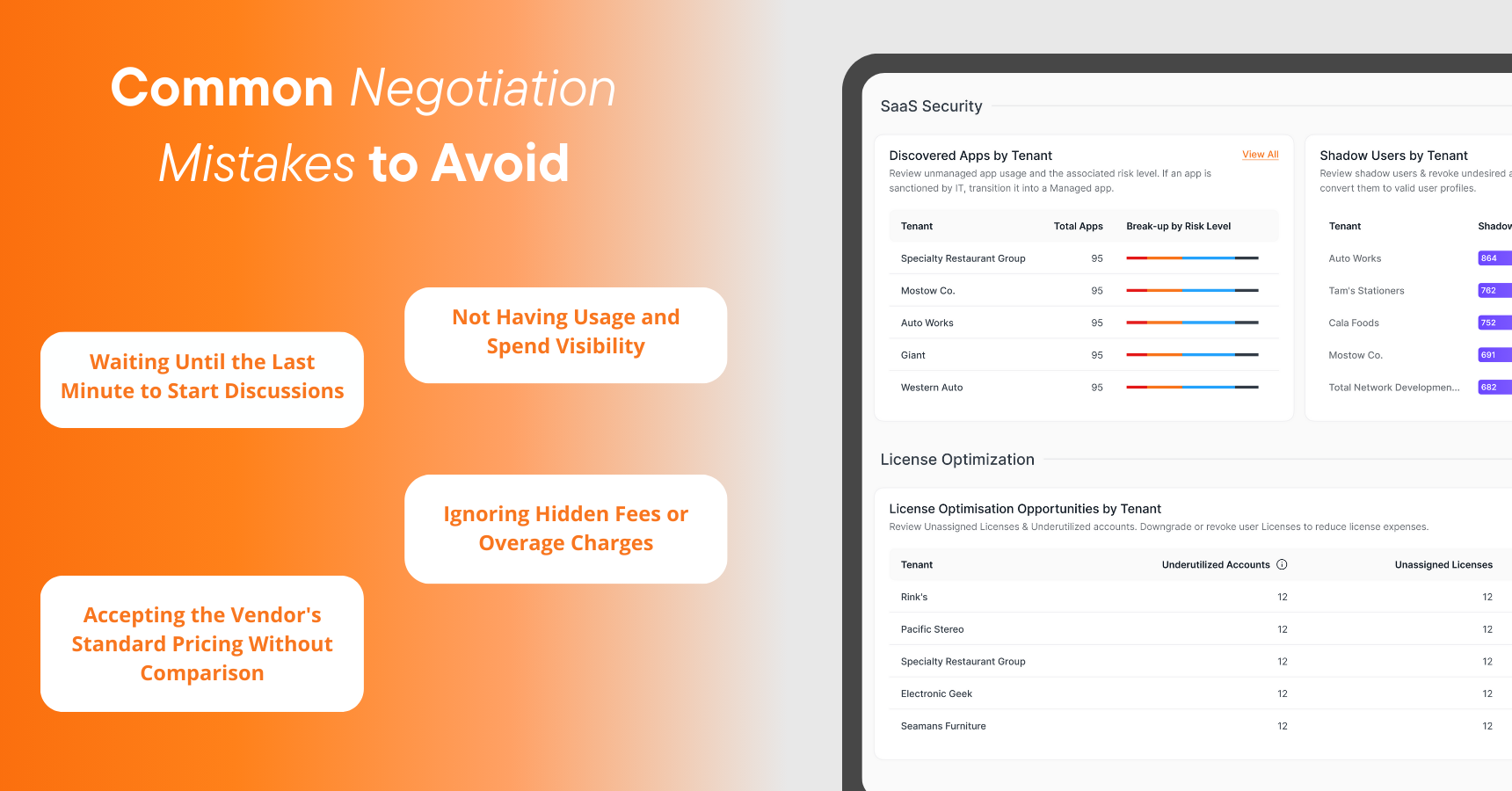
Poor timing, limited visibility into actual usage, accepting standard pricing without comparison shopping, and overlooking additional fees can cost organizations thousands in unnecessary SaaS expenses. These negotiation pitfalls prevent buyers from securing optimal contract terms and pricing models.
Waiting Until the Last Minute to Start Discussions
Organizations frequently begin contract negotiations just weeks before their current agreement expires. This timing error eliminates leverage and forces buyers to accept unfavorable terms.
Auto-renewal clauses typically trigger 30-90 days before contract expiration. Companies that wait until this window closes lose their ability to negotiate meaningful changes to pricing or service level agreements.
Starting discussions 6-12 months early allows time to evaluate alternatives and gather competitive quotes. This timeline enables thorough review of renewal clauses, exit strategies, and potential contract modifications.
Emergency renewals often result in accepting price increases without negotiation. Vendors recognize time pressure and rarely offer volume discounts or improved terms to rushed buyers.
Organizations should mark renewal dates 12 months in advance and begin preliminary discussions immediately. This approach provides maximum negotiating power and prevents costly auto-renewal scenarios.
Not Having Usage and Spend Visibility
Many buyers enter negotiations without understanding their actual SaaS consumption patterns. This lack of visibility weakens their position when discussing pricing models and contract terms - which is why negotiating leverage is really a by-product of SaaS spend management done well across the year, not something you can assemble in the weeks before a renewal.
Usage-based pricing requires detailed consumption data to negotiate effectively. Organizations without this information cannot determine if per-user pricing or pay-as-you-go models offer better value.
Companies should audit their current usage across all SaaS platforms before negotiations begin. This analysis reveals opportunities for cost savingsthrough right-sizing or alternative pricing structures.
Understanding usage patterns also helps identify unnecessary penalties or overage charges in existing contracts. Organizations can then negotiate price protection clauses to prevent unexpected costs.
Service credits become negotiable when buyers can demonstrate specific usage requirements and performance expectations. This data supports discussions about service levels and compensation for outages.
Accepting the Vendor's Standard Pricing Without Comparison
Buyers often accept initial pricing proposals without researching competitor options or industry benchmarks. This approach leaves significant money on the table during contract negotiations.
Pricing transparency requires comparing multiple vendors and their respective pricing models. Organizations should gather at least three competitive quotes before engaging in serious negotiations.
Standard pricing rarely includes available discounts or promotional rates. Vendors typically reserve their best offers for buyers who demonstrate they have evaluated alternatives.
Volume discounts and multi-year commitments can reduce costs significantly. However, these options only become available when buyers show they understand market pricing.
Creating a contract negotiation checklist helps ensure all pricing options are explored. This process includes evaluating different contract terms and identifying the most cost-effective structure.
Ignoring Hidden Fees or Overage Charges
Contract fine print often contains additional costs that dramatically increase total spending. These fees can include implementation charges, penalties for early termination, and usage overages.
Exit clauses frequently include substantial termination fees that trap organizations in unfavorable agreements. Buyers should negotiate reasonable exit strategies that limit financial exposure.
Professional services, training, and integration costs are commonly excluded from base pricing. These expenses can represent 20-50% of the total contract value if not addressed upfront.
Indemnification clauses may shift liability to the buyer in certain situations. Understanding these provisions helps organizations avoid unexpected legal and financial responsibilities.
Service level agreement penalties should flow both ways. Buyers should negotiate service credits for vendor performance failures while limiting their own liability for contract breaches.
How Josys Makes SaaS Contract Negotiations Easier
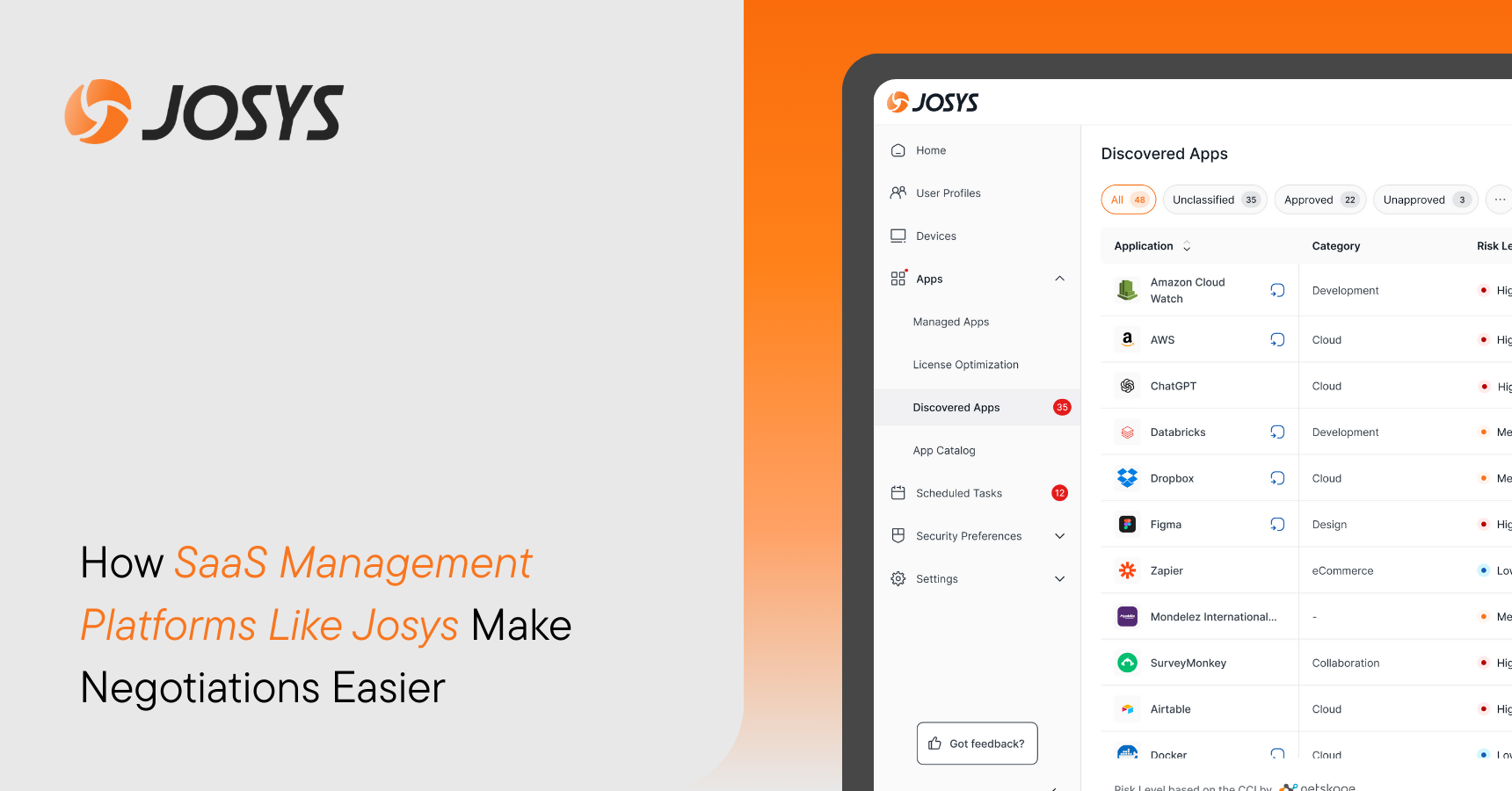
SaaS management platforms provide procurement teams with consolidated visibility into their software spending and usage patterns. These tools deliver actionable data that strengthens negotiating positions while identifying cost-saving opportunities through redundancy elimination and automated monitoring.
Centralized SaaS Visibility
SaaS management platforms consolidate all software subscriptions into a single dashboard. This visibility reveals the complete scope of an organization's software-as-a-service investments across departments and teams.
Procurement teams gain access to contract details, renewal dates, and spending patterns in one location. The platform tracks which employees use specific SaaS tools and how frequently they access different features.
This comprehensive view eliminates the guesswork that weakens negotiating positions. Instead of relying on incomplete spreadsheets or departmental reports, negotiators enter discussions with precise usage data and spending history.
The centralized approach also reveals compliance requirements across different tools. Organizations can identify which applications handle sensitive data requiring GDPR, HIPAA, or CCPA compliance before entering contract discussions.
Data-Driven Leverage
Usage analytics from SaaS management platforms provide concrete evidence for contract negotiations. Organizations can demonstrate actual user engagement levels, feature utilization rates, and peak usage periods to vendors.
Low utilization rates become powerful negotiating tools for reducing seat counts or switching to usage-based pricing models. High engagement levels support requests for volume discounts or enhanced service level agreements.
The platforms track API access patterns, integration usage, and customization requirements across the software stack. This data helps procurement teams negotiate better terms for technical requirements and support services.
Performance metrics including uptime statistics and security incidents create accountability during renewal discussions. Organizations can reference historical data when negotiating uptime guarantees and support response times.
Identify Redundancy
SaaS management platforms automatically detect overlapping functionality across different software subscriptions. The analysis reveals when multiple tools provide similar capabilities, creating opportunities for consolidation.
Feature mapping shows which applications duplicate core functions like project management, communication, or data storage. Organizations can eliminate redundant subscriptions and negotiate better pricing for remaining tools.
The platforms identify unused licenses and inactive user accounts across all software subscriptions. This information supports requests for seat reductions and prevents automatic renewals of unnecessary licenses.
Department-level analysis reveals when different teams purchase competing solutions for identical needs. Consolidating these purchases into enterprise agreements typically reduces overall SaaS spend while improving standardization.
Automated Alerts
Contract management software within SaaS platforms sends automated notifications before renewal deadlines. These alerts provide sufficient time for renegotiation rather than accepting automatic renewals at current rates.
Usage threshold alerts notify administrators when consumption approaches contracted limits. Early warnings enable proactive discussions about pricing tiers and prevent overage charges.
The systems monitor compliance status across all software subscriptions and alert teams to potential violations. This monitoring supports negotiations around data security requirements and regulatory compliance features.
Budget tracking alerts help organizations stay within planned SaaS spending limits. When costs approach predetermined thresholds, procurement teams receive notifications to review contracts and negotiate adjustments before budget overruns occur.
Conclusion
By treating SaaS contracts as dynamic agreements rather than fixed costs, organizations can transform renewals from a financial burden into a strategic advantage. Proactive negotiation, backed by accurate usage data and competitive benchmarks, not only reduces direct spending but also unlocks favorable terms that strengthen long-term vendor relationships.
Tools like SaaS management platforms further amplify this leverage by centralizing contract visibility, exposing hidden inefficiencies, and ensuring negotiations begin well before renewal deadlines. With the right preparation, companies can avoid costly pitfalls such as auto-renewals, hidden fees, and vendor lock-in, while securing pricing structures that scale more predictably with growth.
Ultimately, SaaS negotiations are not just about reducing expenses—they are about creating sustainable value. By adopting a systematic, data-driven approach, organizations gain control over software investments, minimize financial risk, and build a foundation for more flexible, cost-effective technology strategies.
See how Josys can give you the insights you need to cut SaaS costs and negotiate with confidence — book a demo today.