This site uses third-party website tracking technologies to provide and continually improve our services, and to display advertisements according to users' interests. I agree and may revoke or change my consent at any time with effect for the future.
IT asset management has traditionally been a labor-intensive process, requiring manual tracking, complex spreadsheets, and reactive problem-solving. But artificial intelligence is transforming this landscape, offering IT leaders unprecedented opportunities to automate, predict, and optimize their technology investments. This article explores how AI is revolutionizing IT asset management and provides a roadmap for organizations to evolve their capabilities from basic rules to sophisticated machine learning.
How AI Is Transforming IT Asset Management
Artificial intelligence isn't just a buzzword in IT asset management; it's delivering measurable value by automating complex decisions, identifying patterns humans would miss, and enabling truly proactive management.
The most successful implementations focus on three high-impact use cases that deliver immediate ROI while building toward more sophisticated capabilities.
Anomaly Detection: Spotting Issues Before They Become Problems
AI excels at establishing baselines and identifying deviations that warrant attention. In IT asset management, this capability transforms how organizations monitor and respond to unusual patterns.
Traditional monitoring relies on predefined thresholds that often trigger false positives or miss subtle issues. AI-powered anomaly detection, by contrast, learns normal behavior patterns across your IT estate and flags meaningful deviations that require investigation.
Key applications include:
Unusual access patterns: AI can detect when software is accessed at unusual times, from unexpected locations, or by users outside normal permission groups—potential indicators of security issues or license violations.
Spending anomalies: The system identifies unexpected increases in costs, helping teams catch billing errors, unauthorized purchases, or runaway cloud resources before they impact budgets.
Usage spikes and drops: AI identifies sudden changes in application usage that might indicate problems with performance, user adoption, or shadow IT alternatives.
License Right-Sizing: Eliminating Waste Without Sacrificing Productivity
License optimization has always been a balancing act between controlling costs and ensuring users have the tools they need. AI transforms this process from periodic, manual reviews to continuous, data-driven optimization.
AI-powered license right-sizing works by:
Analyzing historical usage patterns across user groups and departments
Identifying licenses that consistently show low or zero utilization
Recognizing when users have overlapping tools with redundant functionality
Recommending optimal license types based on actual feature usage
Predicting future needs based on hiring plans and project roadmaps
The key difference from traditional approaches is the depth and breadth of data analysis. While conventional tools might tell you a license hasn't been used in 30 days, AI systems can recognize complex patterns—like seasonal usage tied to quarterly reporting, or distinguish between core and peripheral features to recommend downgrading to less expensive tiers.
Predictive Renewals: From Reactive to Strategic
Perhaps the most transformative application of AI in IT asset management is shifting renewal management from a reactive scramble to a strategic, forward-looking process.
Traditional renewal management is plagued by last-minute negotiations, limited time for evaluation, and poor visibility into actual value delivered. AI changes this dynamic by:
Forecasting renewal costs: Using historical price increases, market benchmarks, and vendor patterns to predict future costs with remarkable accuracy.
Prioritizing renewal decisions: Automatically flagging renewals that require deeper evaluation based on usage trends, stakeholder feedback, and strategic alignment.
Recommending negotiation strategies: Analyzing vendor behavior, market conditions, and your organization's leverage points to suggest optimal approaches.
Predicting business needs: Correlating growth plans, hiring forecasts, and project roadmaps with license requirements to ensure right-sized renewals.
The most sophisticated systems can even simulate different renewal scenarios, showing the impact of various decisions on costs, user productivity, and strategic initiatives.
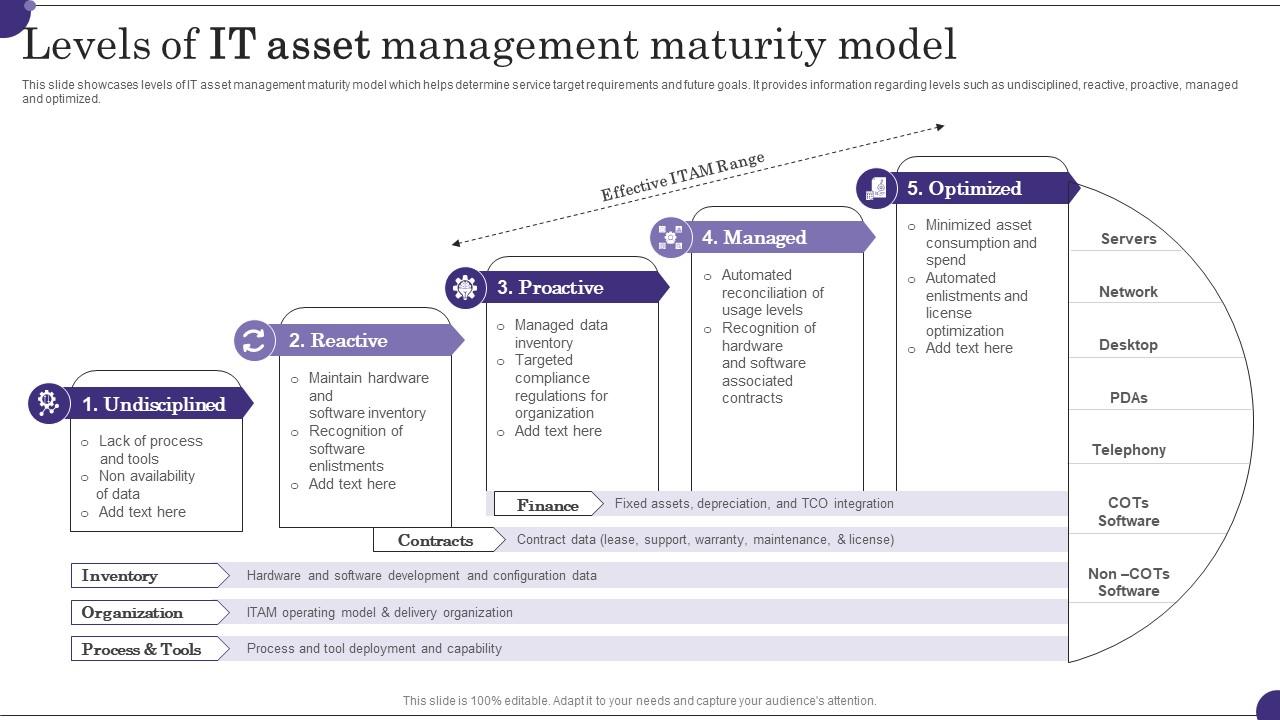
The ITAM AI Maturity Model: From Rules to Machine Learning
Implementing AI in IT asset management isn't an all-or-nothing proposition. Organizations typically evolve through distinct stages of maturity, each building on the capabilities of the previous stage while delivering incremental business value.
Stage 1: Rules-Based Automation
The foundation of AI-powered ITAM begins with rules-based automation that eliminates manual tasks and enforces consistent policies.
At this stage, organizations implement systems that can:
Automatically provision and deprovision licenses based on HR events (hiring, transfers, departures)
Apply standardized approval workflows for software requests
Generate alerts when usage drops below defined thresholds
Flag renewals based on calendar dates
Enforce basic compliance policies
While not "true AI" in the strictest sense, rules-based automation establishes the data collection, integration points, and organizational processes necessary for more advanced capabilities.
Key indicators you're ready for this stage:
You have a centralized inventory of IT assets
Basic ownership and responsibility for ITAM is established
Manual processes are documented and standardized
You have reliable data on license counts and costs
Business value delivered: Organizations at this stage typically reduce administrative overhead by 30-40% and eliminate 90% of basic license compliance risks.
Stage 2: Pattern Recognition and Insights
The second stage introduces genuine machine intelligence that can identify patterns and generate insights without explicit programming.
At this stage, systems can:
Cluster users into personas based on software usage patterns
Identify correlations between application usage and business outcomes
Detect anomalies that fall outside normal parameters
Generate recommendations based on peer comparisons
Predict basic renewal terms based on historical data
This stage represents the transition from automation to intelligence—the system isn't just following rules but identifying patterns that humans might miss.
Key indicators you're ready for this stage:
You have at least 12-18 months of reliable usage data
Basic automation is functioning effectively
You have established KPIs for ITAM performance
Stakeholders trust the data from your ITAM system
Stage 3: Predictive Analytics and Decision Support
The third stage leverages historical data to predict future outcomes and provide sophisticated decision support.
At this stage, systems can:
Forecast future software needs based on business growth and user behavior
Predict renewal terms with high accuracy
Recommend optimal license types based on feature usage patterns
Identify potential compliance risks before they materialize
Generate optimization scenarios with projected cost impacts
The key advancement at this stage is the shift from descriptive to predictive—from telling you what happened to what will happen.
Key indicators you're ready for this stage:
You have multi-year data across your IT portfolio
Pattern recognition capabilities are delivering reliable insights
You have integrated business data beyond IT (finance, HR, project management)
Your organization has developed trust in AI-generated recommendations
Stage 4: Autonomous Optimization and Continuous Learning
The most advanced stage features systems that can make and implement decisions with minimal human intervention while continuously improving their accuracy.
At this stage, systems can:
Automatically adjust license assignments based on changing needs
Negotiate directly with vendor systems for certain renewals
Implement complex optimization strategies across the IT portfolio
Learn from outcomes to improve future recommendations
Adapt to changing business conditions without reprogramming
The hallmark of this stage is systems that don't just recommend actions but take them—within carefully defined parameters—while continuously learning from the results.
Key indicators you're ready for this stage:
Predictive capabilities consistently demonstrate high accuracy
Your organization has established clear governance for autonomous actions
You have integrated feedback loops to evaluate AI decisions
Stakeholders across the organization trust and rely on the system
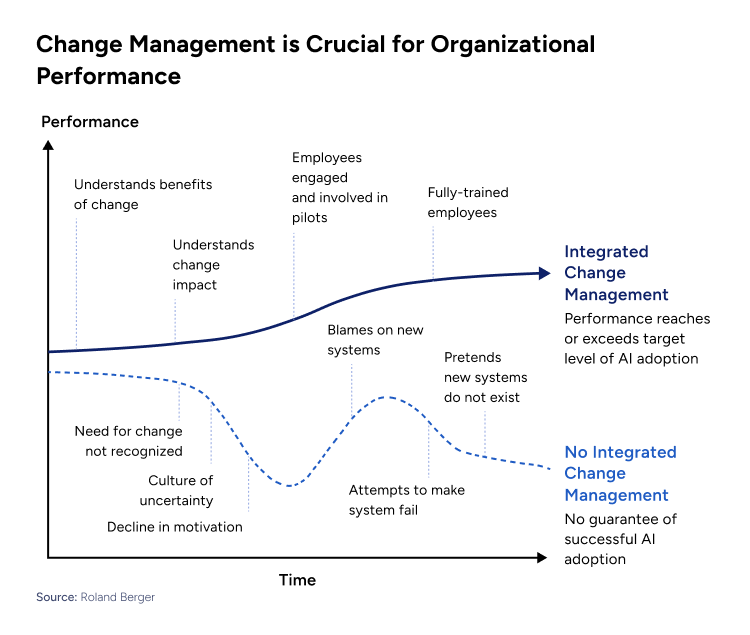
Implementing AI in IT asset management isn't just a technology challenge—it's a human one. Many IT professionals have legitimate concerns about how AI will affect their roles, responsibilities, and value to the organization.
Successful adoption requires a thoughtful change management approach that addresses these concerns while highlighting the benefits for individual team members.
Addressing Common Resistance Points
The first step in effective change management is understanding and addressing the common sources of resistance:
Fear of job displacement: Many IT professionals worry that AI automation will eliminate their positions. Address this directly by emphasizing how AI handles routine tasks so teams can focus on strategic work.
Skepticism about AI accuracy: Technical teams often doubt AI can match human judgment in complex scenarios. Demonstrate the system's capabilities with real examples while acknowledging its limitations.
Loss of control: IT teams accustomed to manual processes may resist surrendering control to automated systems. Implement gradual transitions with human oversight before moving to fully autonomous operations.
Skill gap concerns: Team members may worry they lack the skills to work with AI systems. Provide comprehensive training and emphasize that domain expertise remains essential—AI augments rather than replaces this knowledge.
Training and Skill Development Strategies
Effective AI adoption requires targeted skill development:
Role-specific training: Different team members need different skills. License administrators need to understand how to interpret AI recommendations, while IT leaders need to understand governance and strategic implications.
Hands-on learning: Abstract training rarely sticks. Create sandbox environments where teams can experiment with AI tools using real (but non-critical) scenarios.
Progressive complexity: Start with simple use cases and gradually introduce more sophisticated capabilities as comfort levels increase.
Peer champions: Identify early adopters who can support colleagues and demonstrate practical applications in daily work.
Continuous education: AI capabilities evolve rapidly. Establish regular update sessions to introduce new features and share success stories.
Measuring and Communicating Success
Nothing drives adoption like demonstrated success. Establish clear metrics to track the impact of AI implementation:
Time savings: Measure hours saved on routine tasks
Cost reduction: Track optimized spending and avoided costs
Accuracy improvements: Compare AI recommendations to previous manual decisions
User satisfaction: Survey both IT team members and end users
Strategic impact: Document new initiatives enabled by redirected resources
Success stories: Specific examples of problems solved or opportunities captured
Team recognition: Highlighting individuals who effectively leverage AI tools
Financial impact reports: Translating technical improvements into business value
Creating a Collaborative Human-AI Partnership
The most successful implementations position AI as a team member rather than a replacement:
Define complementary roles: Clearly articulate what AI does best (processing large datasets, identifying patterns, maintaining consistency) and what humans do best (applying context, making nuanced judgments, building relationships).
Establish oversight mechanisms: Create processes for humans to review and override AI decisions when necessary, with feedback loops to improve the system.
Celebrate augmented performance: Recognize achievements that combine human expertise with AI capabilities rather than treating them as separate domains.
Encourage experimentation: Create safe spaces for teams to test new ways of working with AI tools without fear of failure.
Evolve job descriptions: Formally update roles to emphasize strategic work enabled by AI partnership rather than the routine tasks being automated.
Connecting AI in IT Asset Management to Your SaaS Governance Strategy
AI in IT asset management delivers the most value when it feeds a single source of truth that spans SaaS apps, identities, and devices. Running AI as a standalone tool limits its potential. Connecting it to your broader governance strategy unlocks real impact.
Why Silos Weaken AI Accuracy
Anomaly detection, license right-sizing, and predictive renewals depend on complete data. When AI only sees one application, it spots patterns in a vacuum. Extend that visibility across your full SaaS estate, and the same models produce sharper, more actionable insights. A license flagged as underused in one tool might look different once you see the user's activity in adjacent apps.
Identity Context Turns Insights into Action
Knowing who has access, and whether that person is a joiner, mover, or leaver, transforms AI recommendations into enforceable governance actions. Without identity context, AI can suggest revoking a license. With it, your team can automate that revocation the moment an employee changes roles or exits. That's the difference between a recommendation and a policy that enforces itself.
A Solid Foundation Makes AI Reliable
None of this works without accurate, well-maintained asset data. If your inventory is incomplete or stale, AI will inherit those gaps. Building a strong IT asset management for SaaS foundation first ensures the models have something trustworthy to learn from. Clean inputs lead to confident outputs.
Key Takeaways: Implementing AI in Your ITAM Strategy
As you consider implementing AI in your IT asset management processes, keep these essential principles in mind:
Start with clear business objectives: Define specific problems you want to solve rather than implementing AI for its own sake.
Follow the maturity model: Build foundational capabilities before attempting advanced applications.
Invest in data quality: AI systems are only as good as the data they analyze. Ensure you have comprehensive, accurate information about your IT estate.
Balance automation with oversight: Implement appropriate governance to review AI recommendations, especially in early stages.
Address the human factors: Invest in change management and training to ensure successful adoption.
Measure and communicate value: Track both technical metrics and business outcomes to demonstrate ROI.
Evolve continuously: AI capabilities are advancing rapidly. Regularly reassess your approach to incorporate new possibilities.
The Future of IT Asset Management
AI is transforming IT asset management from an administrative burden to a strategic advantage. Organizations that embrace this evolution gain unprecedented visibility, control, and optimization of their technology investments.
The journey from rules-based automation to autonomous optimization doesn't happen overnight, but each stage delivers meaningful value while building toward more sophisticated capabilities. By following the maturity model and addressing both technical and human factors, IT leaders can achieve remarkable improvements in cost, compliance, and strategic alignment.
As AI capabilities continue to advance, the gap between organizations leveraging these tools and those relying on traditional approaches will only widen. The question isn't whether AI will transform IT asset management, but whether your organization will be at the forefront of this transformation or struggling to catch up.
Ready to transform your IT asset management with AI? Book a demo with Josys today to see how our intelligent platform can help you reduce costs, improve compliance, and make more strategic technology decisions.
FAQ: AI in IT Asset Management
How long does it typically take to implement AI-powered ITAM?
Most organizations can implement basic rules-based automation within 3-6 months. Advancing to pattern recognition typically requires 6-12 months of data collection and system learning. Full predictive capabilities usually emerge after 12-18 months of operation with quality data.
What data sources are required for effective AI in ITAM?
At minimum, you need comprehensive inventory data, accurate licensing information, and reliable usage metrics. More advanced applications benefit from integration with HR systems (for organizational context), financial systems (for cost data), and project management tools (for forward-looking needs).
How do we ensure the AI makes appropriate recommendations?
Start with a "human in the loop" approach where AI recommendations are reviewed before implementation. Track the accuracy of recommendations over time, and gradually increase autonomy in areas where the system demonstrates consistent reliability.
What skills do our team members need to work effectively with AI-powered ITAM?
Technical teams need basic data literacy and understanding of AI concepts, but not necessarily programming skills. More important are critical thinking abilities to evaluate recommendations, domain expertise to provide context, and communication skills to translate technical insights into business value.
How do we measure the ROI of AI in ITAM?
Track direct cost savings (license optimization, avoided purchases), time savings (automated processes, faster decision-making), risk reduction (compliance improvements, reduced audit exposure), and strategic value (better alignment with business needs, improved user productivity).